
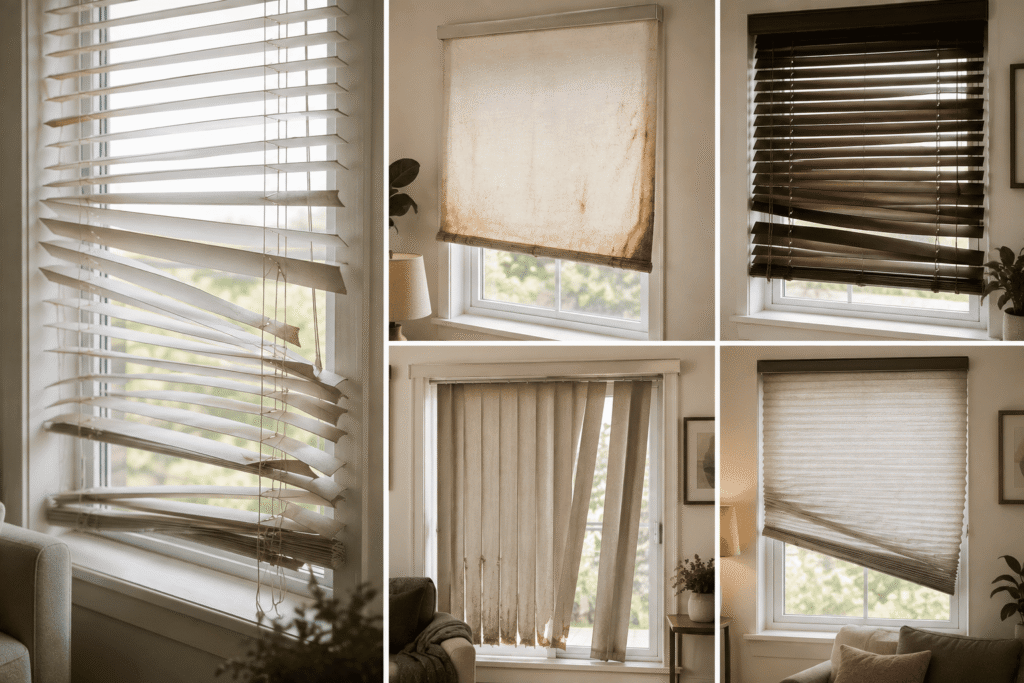
Window blinds don’t fail all at once — they wear down gradually, and it’s easy to get used to small issues without noticing how much they’ve added up. Here are five clear signs it’s time to consider a replacement rather than another round of minor fixes.
1. Warping or Sagging Slats
If slats are visibly bent, bowed, or no longer sitting flush against each other when closed, that’s a sign of material fatigue, usually from prolonged heat or humidity exposure. This is especially common with wood or lower-grade vinyl blinds in rooms that get direct afternoon sun. Once slats warp, they typically continue to worsen rather than settle, and individual slat replacement often isn’t cost-effective compared to a full replacement.
2. Cords That Are Fraying, Tangled, or Broken
On corded blinds, fraying or snapped cords are both a functional problem and a safety one — a broken lift cord can cause the blinds to fall unexpectedly, and frayed cords are more likely to tangle or snap further. If you’re already dealing with cord issues, it’s a natural point to consider switching to a cordless design rather than repairing the existing corded mechanism.
3. Visible Fading or Discoloration
UV exposure breaks down fabric and vinyl over time, causing uneven fading, particularly on the side facing the window. Beyond the cosmetic issue, faded material is often more brittle and prone to cracking or tearing, meaning the fading is usually a visible symptom of broader material degradation rather than a purely surface-level issue.
4. Difficulty Opening, Closing, or Tilting
If blinds or shades have become noticeably harder to operate — sticking partway, requiring extra force, or no longer tilting evenly — this usually points to a worn lift mechanism or headrail issue rather than something a quick adjustment can fix. Mechanical wear tends to get worse with continued use rather than resolve on its own.
5. Persistent Dust, Odor, or Mold, Especially in Bathrooms and Kitchens
Fabric shades in high-humidity rooms can develop mold or mildew that cleaning doesn’t fully remove, and blinds that have absorbed cooking odors or years of dust can become difficult to fully refresh. When cleaning no longer restores the material to a genuinely clean state, replacement is usually more practical than continued maintenance.
When Repair Still Makes Sense
Not every issue requires full replacement — a single broken slat, a stuck tilt wand, or a minor cord adjustment can often be repaired individually, especially on newer, higher-quality blinds. The signs above are specifically about wear that tends to compound rather than isolated, fixable issues.
Replacing as an Opportunity to Upgrade
If you are replacing, it’s worth reconsidering the format entirely rather than just swapping like-for-like — for example, moving from corded to cordless, or from standard vinyl to a more durable faux wood option, since you’re already committing to the cost and labor of a new installation.
If you’re noticing any of these signs and aren’t sure whether a repair or full replacement makes more sense, an in-home assessment can usually settle it in a few minutes — we can look at the specific wear pattern and give you a straight answer either way.