
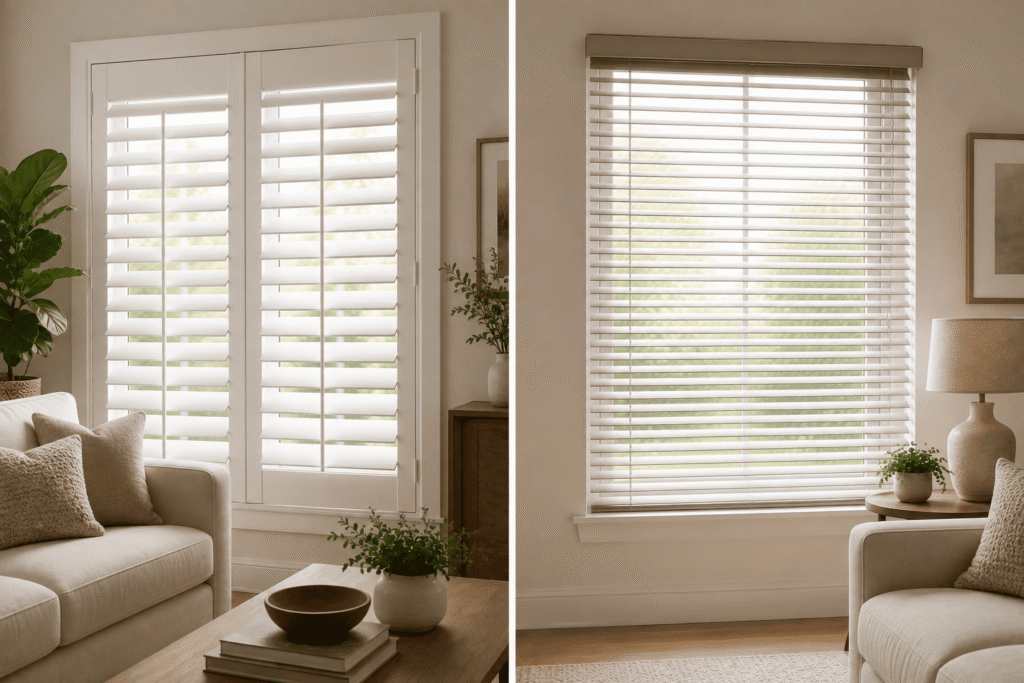
Plantation shutters and traditional blinds both control light and privacy, but they’re built differently, priced differently, and suit different homes. If you’re deciding between the two, understanding the structural and practical differences will help more than comparing photos side by side.
Structural Differences
Traditional blinds are made of horizontal or vertical slats connected by cords or a cordless lift mechanism, typically mounted inside or outside the window frame on a lightweight headrail. Plantation shutters, by contrast, are built as a solid frame with wider, fixed-hinge louvers that swing open like a small set of doors or panels. Shutters are permanently mounted to the window frame itself, rather than hung like blinds.
Durability
Because shutters use a rigid wood, faux-wood, or composite frame rather than fabric or thin vinyl slats, they generally last significantly longer than blinds and are far less prone to warping, bending, or sagging over time. Blinds, particularly lower-cost vinyl versions, tend to need replacement more frequently, especially in high-sun or high-humidity rooms.
Light and Privacy Control
Both options let you adjust the angle of the slats/louvers to control light, but shutters typically offer a wider adjustment range and a more complete blackout when fully closed, due to the tighter seal of a hinged, framed system versus a hanging slat system. Blinds are still highly effective for everyday light control, just with slightly more light leakage around the edges compared to a well-fitted shutter.
Look and Resale Value
Plantation shutters are often considered a permanent architectural feature rather than a window covering, which is why many real estate listings highlight them specifically — they can add to a home’s resale value in a way that blinds typically don’t, since shutters are viewed as a built-in upgrade rather than a removable accessory.
Cost Comparison
Shutters cost more upfront than blinds, often several times more per window, reflecting the more substantial materials and installation labor involved. Blinds remain the more budget-friendly option, particularly for renters, temporary living situations, or homeowners outfitting many windows at once on a set budget.
Maintenance
Shutters are easy to maintain — a simple wipe-down keeps them clean, and there are no cords or fabric to fade or fray. Blinds, especially fabric or wood-look versions, may need more frequent cleaning or occasional slat replacement if damaged.
Which Rooms Suit Which Option
Shutters work particularly well in living rooms, dining rooms, and large picture windows where their architectural look matters most. Blinds remain a practical, cost-effective choice for bedrooms, kitchens, home offices, and rental properties, where flexibility and lower cost often outweigh the long-term durability benefits of shutters.
Making the Decision
If you’re renovating for the long term or care about resale value, shutters are usually the stronger investment. If you’re working with a tighter budget, need to outfit many windows, or are in a rental, blinds remain the more practical choice without a meaningful compromise on function.
If you’re weighing both for the same space, it often helps to see samples of each installed side by side before deciding — we can bring both options to your home consultation so you can compare them in your own lighting.